
HOUSTON — Every disaster seems to begin with the same question: Why didn’t anyone warn us?
Emergency managers say that’s rarely the problem.
The information is often available well before hurricanes make landfall, floodwaters rise or dangerous heat settles across the region. The greater challenge, they say, is making sure people know where to find trusted information—and more importantly, act on it before an emergency unfolds.
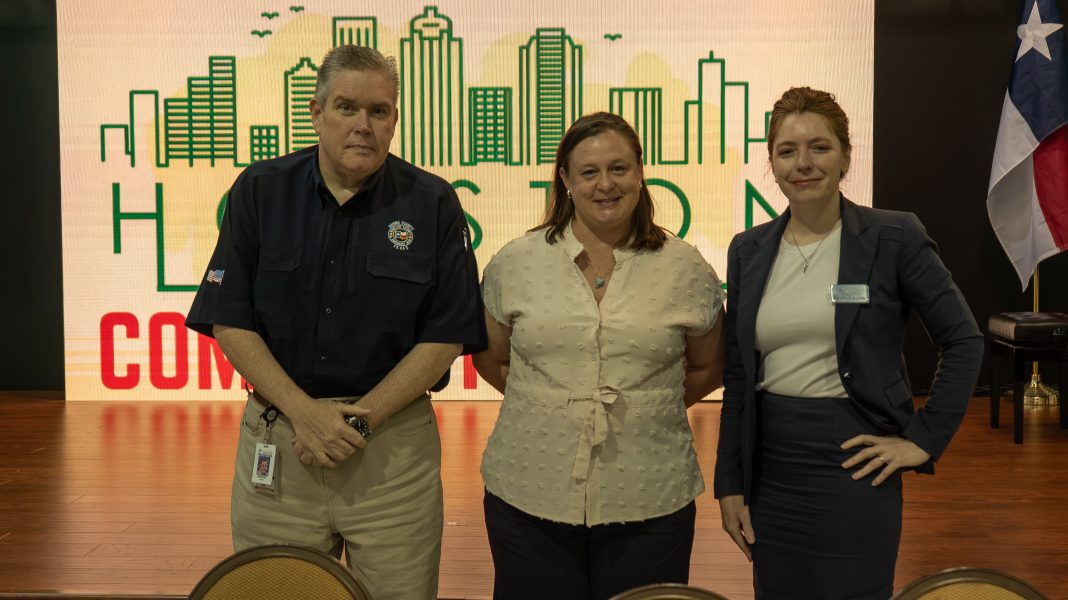
That message anchored Houston Community Media’s July 22 briefing, “Hope for the Best, Plan for the Worst — Disaster Preparedness,” which brought together journalists, content creators, emergency managers and nonprofit leaders to discuss how stronger communication before disasters can help save lives and strengthen communities. The discussion focused on preparing before, during and after emergencies while highlighting local resources available to residents across Greater Houston.
Bryan Murray, deputy director and public information officer for the Harris County Office of Homeland Security & Emergency Management, challenged one of the most common misconceptions about disaster readiness.
“Stop thinking of preparedness as something that we do for six months of the year,” Murray said. “If you’re going to live in Harris County, Texas, or the Gulf Coast, this is something we do 12 months a year. It’s a continuous process.”
Living along the Gulf Coast means preparing for far more than hurricanes, Murray said. Flooding, winter storms, derechos and extreme heat have all demonstrated that disasters can strike in any season. Preparation includes reviewing insurance policies before they’re needed, understanding deductibles and coverage limits, assembling emergency supplies, identifying trusted information sources and making family emergency plans well before severe weather threatens the region.
Ironically, Murray said, today’s challenge isn’t a shortage of information.
“The information was out there from official sources telling you this is what’s going to happen. And here’s what you need to do. And this is when you need to do it,” he said.
Getting accurate information to the public has elevated the role of community and ethnic media, whose relationships with local audiences often make them among the most trusted sources during emergencies. Murray encouraged journalists to subscribe to official emergency alerts and help amplify verified preparedness messages before disasters strike.
“The more media that subscribes to those, and the more you share that information with your readers, your viewers, your listeners, the more prepared our community gets,” Murray said. “You guys are the linchpin in public information.”
Brooke Campbell, director of community outreach and disaster recovery at United Way of Greater Houston and co-director of the Greater Houston Disaster Alliance, said strengthening those partnerships is essential to closing what she described as the region’s disaster “information gap.”
“We fully recognize and understand that it’s you all who have the trust of your audiences,” Campbell said. “There’s no reason that we can’t come together and ensure that the right messages are getting into the hands of the audiences you’re trying to reach.”
Campbell encouraged residents to become familiar with available resources before they are needed, highlighting ReadyHarris emergency alerts, United Way’s 211 helpline, multilingual household preparedness plans and the Greater Houston Disaster Alliance, which coordinates nonprofit disaster recovery efforts across Harris, Fort Bend, Montgomery and Waller counties. She also noted that preparedness workshops and emergency supply distributions are held throughout the year by nonprofit organizations across the region, giving families opportunities to prepare before disaster strikes.
Throughout the discussion, panelists emphasized that preparedness extends beyond government agencies. Neighbors, community organizations, nonprofits and local media all play a role in ensuring life-saving information reaches the people who need it most before severe weather arrives.
Murray closed with a reminder that emergency alerts are designed to do more than inform the public.
“When we create a message, we’re not creating this message just out of thin air,” he said. “There’s actual social science involved here.”
Those alerts, he explained, are carefully crafted to encourage people to take protective action.
“It’s not just to tell you that it’s going to rain. It’s actually we’re imploring you to act… They’re not just informational, they’re trying to drive people to action. And the more that you can stress the action piece through your channels, the more successful we’re all going to be in that.”