



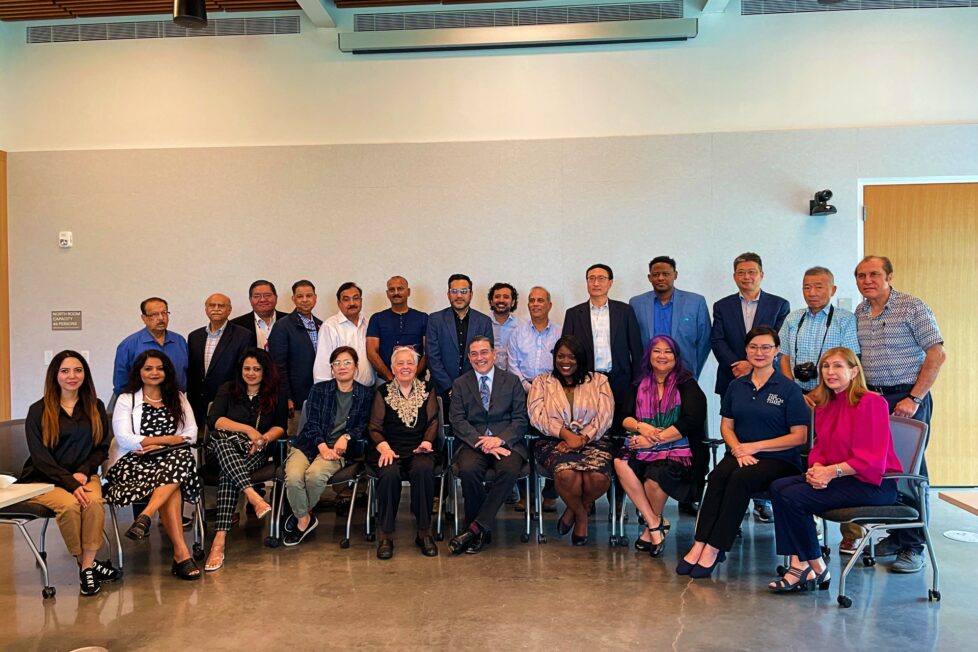
United States Census Director Robert Santos visited Houston on May 24 to encourage ethnic media to help continue being the “trusted voices” of the community.
This type of partnership between the bureau and local media is crucial to making sure the community understands the importance of the CB and the many valuable resources it brings.
Director Santos shared a personal story – that happened when he was around 5 or 6 years old – on why he is passionate about serving the community in the most “authentic” way.
“During the fall, it would get kind of cool in our little bungalow house, we had seven people in it. It would be a little drafty and I was sound asleep with the covers over me and I was startled because I felt something. Like most homes, we had mice and one had crawled up onto the bed. It was on top of the cover and started running up the side of my body,” he explained.
Santos said he screamed and threw himself out of bed, waking up everyone in the house. For nearly a week he could not sleep peacefully, terrified that the mouse would return. One day, his grandmother had him lie in the bed as she took a branch, had him close his eyes, then whispered a prayer while brushing the leaves across his body.
She told him she gave him a blessing to take away the fear.
“It absolutely worked. From then on, I was no longer afraid of a mouse climbing up,” Santos said. “It occurred to me years later that what she had done, she had used her whole self, all the powers and life experiences and the culture she had within her to address a problem with her loved one.”
Santos said when he got the call from the White House a couple of years ago and they spoke to him about consideration of being nominated for the position, he thought about how he would present himself.
Should he cut his long hair, which he wears in a ponytail? Should he get a buzz cut, possibly deemed more acceptable? He thought about his grandmother.
“I realized that by going through that experience as a little kid that my grandmother had taught me to be my whole self,” he said.
He did not change his appearance or alter who he was and, as clearly shown, he was selected for the position.
“Getting to the Census Bureau and leading the largest federal statistical agency in the country, I saw that I could contribute to the excellence that has always been a part of the Census Bureau by using my life experience and teaching others that their life experience, their culture, their values add something different and new in terms of creativity in the nation,” Santos said. “Having a common problem and getting different perspectives on it, that’s when you get the most insight. That’s when you can identify the real solution, rather than treating a symptom.”
The 2020 Decennial Census, while historic, showed in many instances the “distrust” and “mis- and disinformation” across the nation. Many residents were apprehensive about filling out self-response surveys and a looming “citizen question” created controversy.