

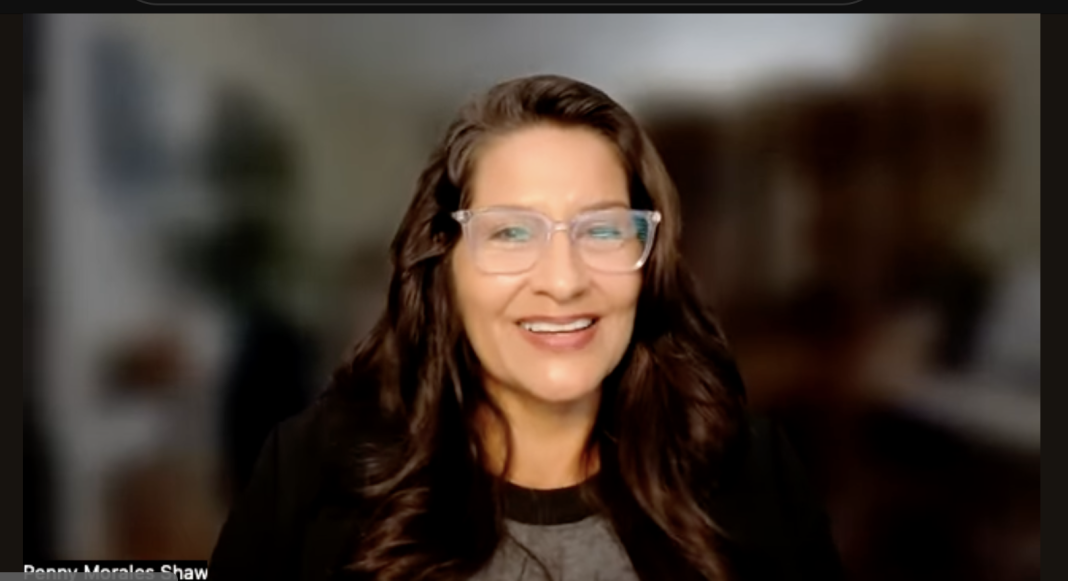

HOUSTON — Strengthening families is one of the most effective ways to strengthen children, according to State Rep. Penny Morales Shaw, who said issues ranging from public education to juvenile justice ultimately begin at home.
Closing Houston Community Media’s three-part “Who Cares About Our Youth?” briefing series, Morales Shaw said public education, mental health, juvenile justice and workforce development are all connected by one common denominator: strong families.
“The family is the basis of society,” Morales Shaw said. “Our youth are one of the most important things that we can invest in because that investment yields results in every system across the spectrum.”
Morales Shaw, who has represented House District 148 since 2021, said her own experience raising four children while balancing a legal career and public service has shaped both her legislative priorities and the legislation she files each session, including proposals supporting paid family leave and working families.
Rather than focusing solely on the challenges facing young people, Morales Shaw encouraged policymakers to examine the conditions that contribute to those issues in the first place.
“When you talk about the family, you have to look at bigger picture things like wages, worker safety and foster care,” she said. “Government should be looking at how to strengthen the family unit.”
That family-first philosophy shaped nearly every topic discussed throughout the briefing—from education and juvenile justice to immigrant families and the role of community journalism.
RELATED: Rep. Gene Wu Opens Houston Community Media Series on Challenges Facing Texas Youth
Education beyond the classroom
Morales Shaw said one of the greatest concerns she hears from parents, teachers and administrators involves shrinking resources while expectations continue to grow.
She pointed to school closures, reductions in after-school programs, pre-kindergarten and tutoring, increased standardized testing requirements, and diminished support for special education and dual-language programs.
Teachers, she said, are being asked to do more while receiving fewer resources.
“They’re getting squashed between responsibility and support,” Morales Shaw said. “The responsibilities and burdens right now are much greater than the support they’re finding.”
She argued that adequate school funding extends well beyond textbooks and teacher salaries.
Funding also provides counselors, school nurses, extracurricular activities and other wraparound services that often become lifelines for students experiencing challenges outside the classroom.
“When you’re spending six to eight hours a day in an institution, you want it to bring value to your child,” she said. “You want it to enhance their abilities and address the shortcomings they may need to get to an equal playing field.”
Preventing the pipeline
Morales Shaw also expressed concern over policies she believes criminalize children too early.
She referenced previous legislation aimed at raising the minimum age at which children can be handcuffed and arrested on school campuses, arguing that introducing young students to the justice system at an early age can have lasting psychological consequences.
“If you’re allowing a 10-year-old to be handcuffed on school grounds and be put into a punitive system, that’s already a wrong turn,” she said.
Rather than waiting until violence, mental health crises or academic struggles emerge, Morales Shaw said Texas should invest earlier by giving children the support they need before problems escalate.
Concerns for immigrant youth
Responding to questions from members of Houston Community Media’s ethnic news outlets, Morales Shaw also discussed the impact of recent federal immigration policies on Texas families. She expressed concern about policy changes that she said could affect immigrant communities and emphasized the importance of ensuring families understand how those decisions may influence their daily lives.
The role of ethnic media
Morales Shaw concluded the discussion by emphasizing the importance of ongoing collaboration between lawmakers and community journalists.
“I think it’s a two-way road,” she said. “We need you to tell us what families are experiencing.”
She said legislators also have a responsibility to ensure journalists understand policy decisions that may quietly occur but have significant consequences for local communities.
“We need to keep you informed about these kinds of things that are quietly happening in the background, but very loudly impacting immigrant families,” Morales Shaw said.
The briefing concluded Houston Community Media’s three-part “Who Cares About Our Youth?” series, which explored education, juvenile justice, technology, public safety and family policy through conversations with Texas lawmakers. Throughout the series, one message remained consistent: improving outcomes for children requires sustained investment—not only in schools, but also in the families and communities that help young people thrive.